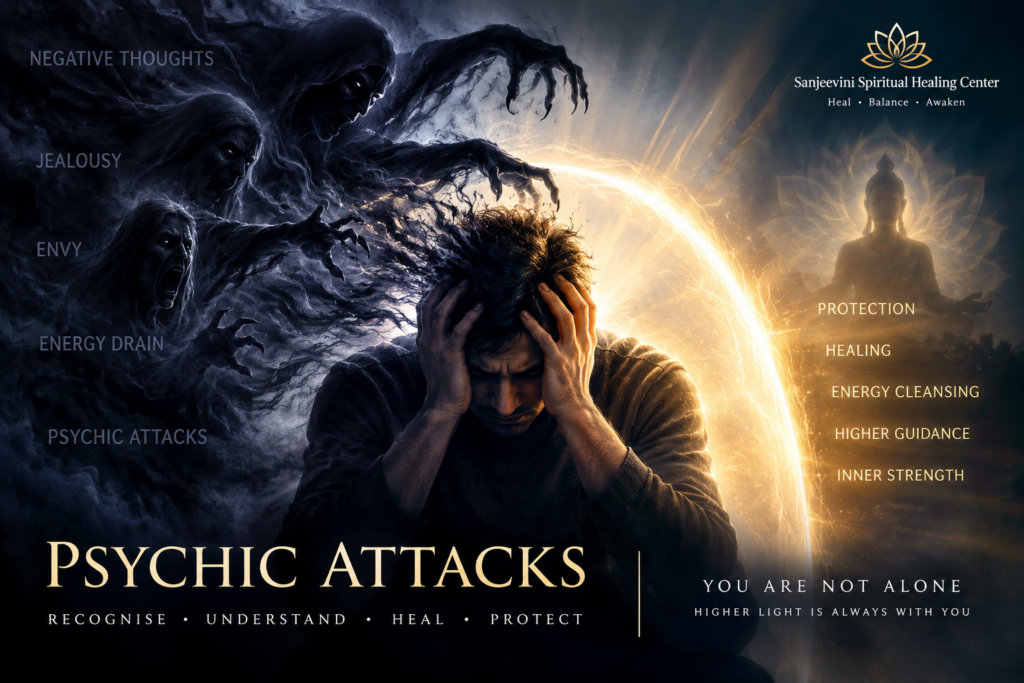
Psychic Attacks
Sometimes a person experiences a sudden and unusual change in their thoughts, emotions, energy, sleep or sense of wellbeing and begins to wonder whether there is something deeper behind the experience.
Within spiritual and occult traditions, one possible framework used to explore such experiences is the concept of a psychic attack.
But how do you distinguish a spiritual interpretation from the many other possible physical, emotional or psychological causes?
Explore the Subject Contact SSHCPsychic Attacks, Negative Energy & Spiritual Interference
The term psychic attack is used in different spiritual, occult and energy traditions to describe a perceived harmful influence directed toward a person, their energetic field or, in some traditions, a place.
What Is a Psychic Attack?
Energetic & Spiritual Perspective
In the traditional framework explored by SSHC, a psychic attack may involve the perceived movement or manipulation of harmful or disturbing energies toward an individual or environment.
Different traditions may describe such influences using different language, including negative energy, thought forms, spiritual attack, psychic interference, entities or other forms of subtle disturbance.
Why Careful Assessment Matters
Experiences commonly associated with psychic or spiritual attack can also have entirely different causes.
For this reason, a responsible exploration should consider the person’s physical condition, emotional state, psychological wellbeing, environment, relationships and individual circumstances rather than making assumptions from a single symptom.
Different Forms of Psychic & Spiritual Interference
The original SSHC material explores several possible forms of psychic or negative energetic influence. These can be understood as different frameworks through which an unusual experience may be examined.
Intentional Psychic Attack
Some occult traditions describe deliberate attempts to direct harmful intention or ritual activity toward another person. These traditions may associate such activity with spells, curses, ritual practices, invocations, black magic or other symbolic and energetic methods.
Unintentional Psychic Influence
The SSHC material also explores the possibility that intense anger, resentment, jealousy or other negative emotional states may be projected without conscious awareness or deliberate intent.
Negative Thought Forms
In esoteric traditions, sustained thoughts and intentions may be described as thought forms. This concept is used to explore how repeated emotional and mental patterns may continue to influence a person’s inner experience.
Spells, Curses & Ritual Influence
Across many spiritual and cultural traditions, practices involving curses, spells, witchcraft, voodoo and ritual intention have been described as possible forms of harmful spiritual influence.
Entity & Spirit Concepts
Some traditions interpret unusual experiences through the possibility of spirit or entity attachment or interference. SSHC explores these concepts within its broader work on spirit releasement and spiritual enquiry.
Energetic Vulnerability
Within subtle-energy traditions, emotional distress, prolonged fear, exhaustion, unhealthy habits and unresolved experiences may be viewed as factors that can weaken a person’s sense of energetic balance or resilience.
Intentional Psychic Attacks
The original SSHC discussion examines deliberate psychic or occult attacks as a category involving the conscious intention to create disturbance, harm, control or manipulation.
Depending on the tradition being discussed, this may be associated with spells, curses, ritual practices, mantras, invocations, symbolic objects or other methods believed to direct harmful influence.
A responsible spiritual enquiry should not assume that every difficult event is the result of intentional attack. Individual circumstances require careful consideration.
Unintentional Psychic Attacks
Not every perceived harmful influence is considered deliberate within the original SSHC framework.
Intense emotional exchanges, prolonged hostility, jealousy, anger and other strongly charged interactions are sometimes interpreted in subtle energy traditions as creating an unwanted energetic exchange.
Whether understood spiritually, emotionally or psychologically, recurring patterns of hostile interaction are worth recognising and addressing.
Negative Energies, Thought Forms & Spiritual Concepts
The language used to describe subtle experiences varies considerably between traditions. What one system calls a thought form, another may describe as negative energy, psychic interference or spiritual influence.
Negative Emotional Patterns
Long-standing anger, resentment, fear, bitterness and other unresolved emotional patterns can profoundly influence how a person experiences themselves and their relationships.
Thought & Intention
Many spiritual systems give importance to sustained thought and intention. This creates a useful area of enquiry into how repeated mental patterns may shape perception, behaviour and personal experience.
External & Internal Factors
A complete exploration should consider both perceived external influences and internal factors such as stress, trauma, health, relationships, environment and prolonged emotional disturbance.
Possible Signs & Symptoms Associated With Psychic Attacks
The following experiences have traditionally been associated with psychic attacks or negative energies in the SSHC material. They are not diagnostic criteria and can also occur for many physical, psychological or emotional reasons.
When Something Feels Different, Where Do You Begin?
The most useful first step is not necessarily to decide immediately that you are under psychic attack.
When did the experience begin?
Did anything significant happen before it started?
Are there physical, emotional or environmental factors involved?
Is the pattern temporary, recurring or progressively becoming stronger?
Does the experience require medical or psychological assessment?
Are there also spiritual questions you wish to explore?
A meaningful enquiry begins with observation rather than fear.
Spiritual Protection & Energetic Awareness
The original SSHC approach emphasises the importance of caring for the person’s overall energetic, emotional and physical wellbeing.
Awareness
Recognising recurring emotional, behavioural and environmental patterns can help a person understand what may be contributing to their experience.
Energetic Balance
Traditional approaches may explore the aura, chakras and other subtle-energy systems as frameworks for understanding energetic balance and disturbance.
Healthy Boundaries
Emotional boundaries, supportive relationships, adequate rest and addressing harmful situations are important practical aspects of personal wellbeing.
Spiritual Practice
Prayer, meditation, contemplative practice and other spiritual disciplines may provide a personal framework for grounding, reflection and resilience.
Professional Support
Depending on the nature of the experience, appropriate healthcare, psychological support or spiritual guidance may all have an important role.
Individual Assessment
There is no single explanation that fits every experience. The individual’s history and complete circumstances matter.
How Psychic Attack Concerns Are Explored at SSHC
At Sanjeevini Spiritual Healing Center (SSHC), the enquiry begins with the individual’s experience rather than immediately assuming a single cause.
Understand the Experience
The person’s symptoms, history, circumstances, relationships and the pattern of the experience are considered.
Explore Possible Factors
Physical, emotional, psychological, environmental and spiritual perspectives may all be relevant depending on the individual situation.
Consider an Appropriate Spiritual Framework
Where relevant, SSHC may explore concepts involving negative energy, aura, chakra imbalance, psychic interference, cord attachment, spirit attachment or other spiritual and energy-oriented perspectives.
Choose the Appropriate Next Step
The approach may involve spiritual healing, energy-oriented practices, protection work, further enquiry or referral for appropriate medical or mental-health support when required.